A proposal to lease a suitable parcel of government land in Maharashtra for a non-commercial, residential youth-development and meditation centre — open to every student and citizen, free of charge, built and run jointly by Chetana Education Society and the Dhammacakka Foundation Trust under a Memorandum of Understanding.

The aim is simple and lasting: to develop young people who are effective, well-rounded, and genuinely useful to society — people who carry both knowledge and virtue. Every course, from a three-day stay to a personal retreat, is built around five everyday habits that quietly shape a life and a community.
A nation rises on the character of its young people. This centre instils — at no cost to families or the State — the everyday habits of cleanliness, order and self-discipline that turn capable students into capable citizens. The land remains public; the public benefit is permanent.
The primary focus is university students. They are independent, able to travel on their own from anywhere, and free to come whenever their studies allow — making them the ideal first beneficiaries of a residential programme. The centre also welcomes supervised school groups, working professionals, and members of the public.
The main audience. Young adults who can manage themselves, arrive independently, and use a free residential course to reset, refocus and return to their studies stronger.
Modern study and work leave many young people mentally exhausted — what is now widely called burnout. The centre is a place to recharge: to recover energy, rebuild concentration, and go back to study or work renewed. Anyone may return as often as they need to.
School and youth groups are welcome when accompanied by a responsible teacher or guardian throughout the stay — a non-negotiable safeguard for young participants.
Adults seeking a quiet, structured break for personal practice are welcomed into the flexible retreat track, in individual rooms, for as long or as short a stay as suits them.
The practice is deliberately accessible. It is not a single rigid breath-only technique that defeats newcomers. Instead, the approach is adapted to each participant — gently clearing the common obstacles that beginners hit, so that practice brings genuine calm and a sense of ease rather than frustration.
The goal of every session is a settled, peaceful mind. From that calm comes the real benefit: restored energy, sharper concentration, and the steadiness to handle study, work and daily life. This is meditation as a practical life skill — open to people of any background, with no prior experience required.
A still mind is a clear mind. Clarity is what a tired student needs most — and what no exam can teach.
Every building exists to serve the programme. The layout keeps women's and men's accommodation fully separate, gives groups and individuals their own spaces, and places a large practice hall at the heart of the campus. Final dimensions are confirmed at the site master-plan stage, once a parcel is allocated.

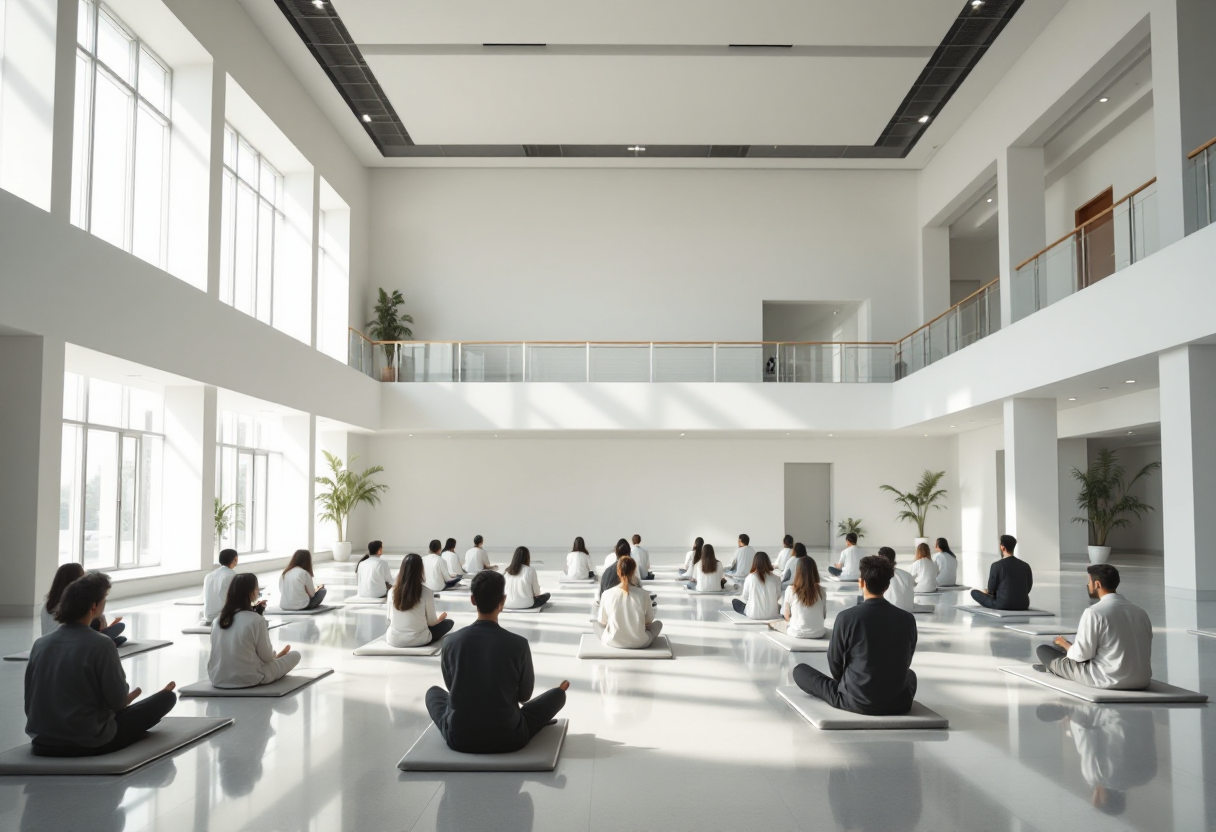
A spacious two-storey hall — the principal venue for group meditation, guided sessions and ceremonies. Sized to host a full course intake in seated practice.

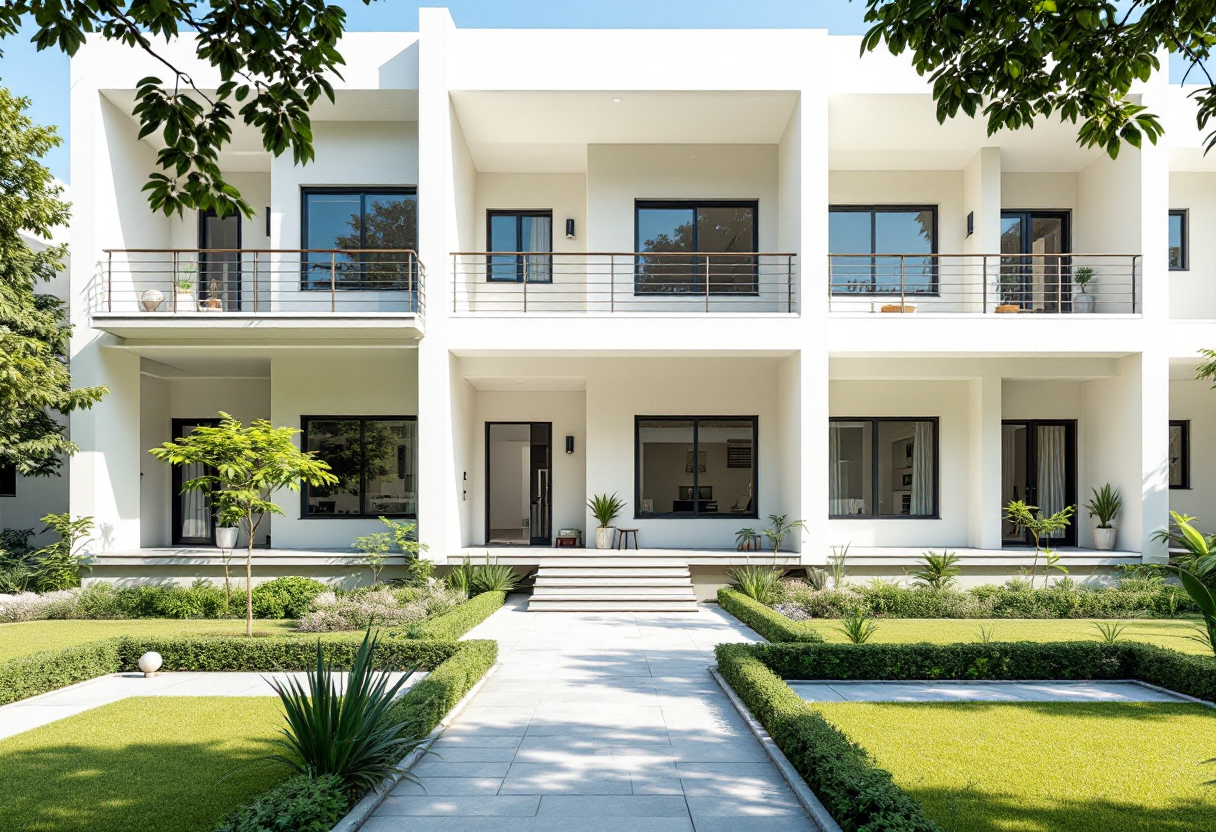
A dedicated three-storey block for women attending the residential course, with shared dormitory-style rooms supervised by female staff throughout the stay.

A separate three-storey block for men attending the residential course — mirroring the women's block, fully independent, so both run concurrently without overlap.

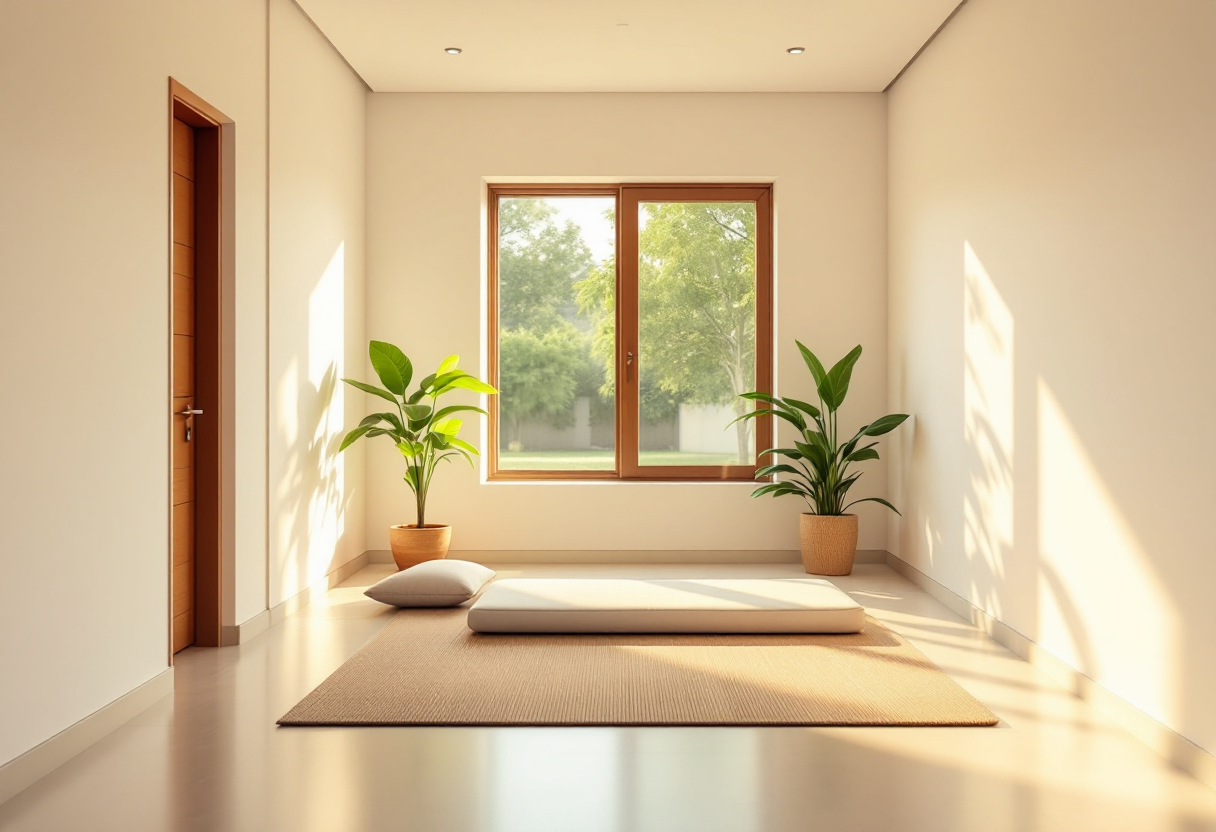
Individual private rooms for the flexible personal-retreat track — for committed practitioners who come on their own schedule, for any length of stay.

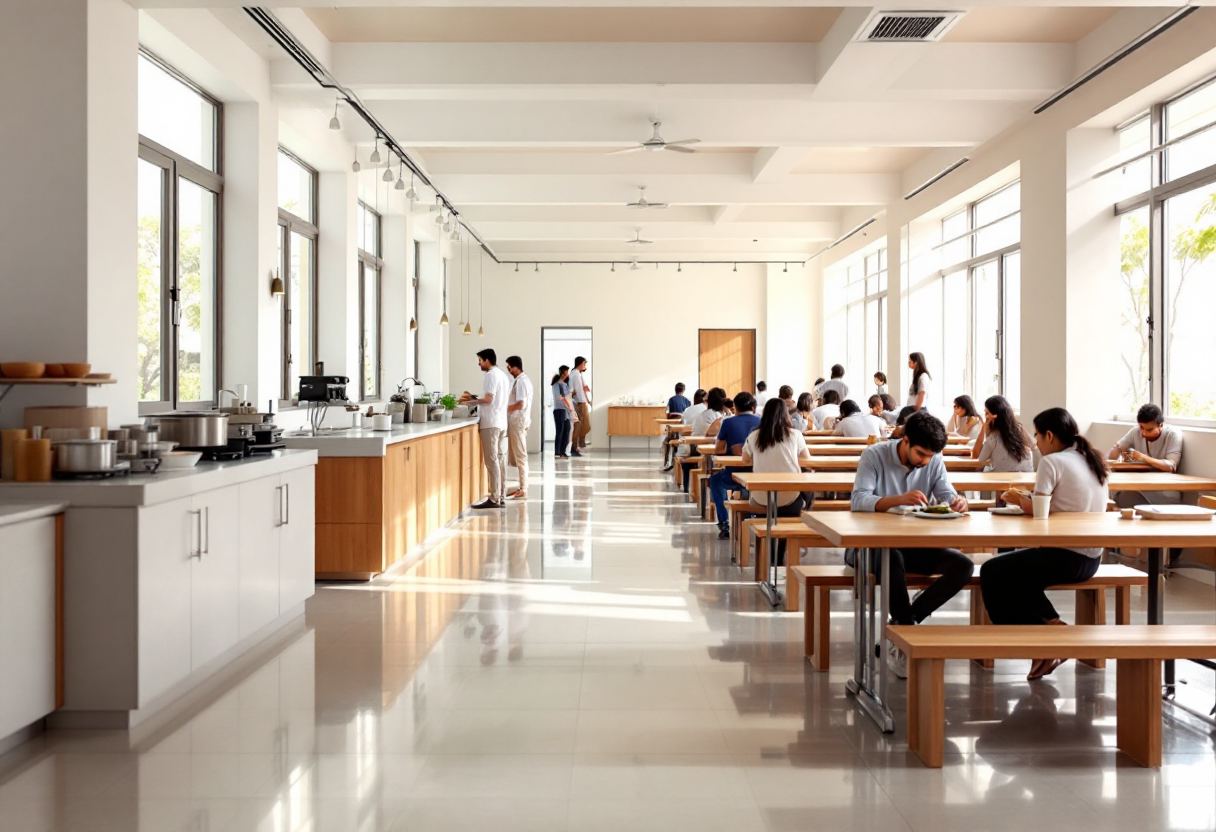
A clean, well-run communal dining hall serving simple, wholesome meals to all participants — itself a daily lesson in cleanliness, order and shared responsibility.

A teaching space for the evening Buddhist Study lectures — open to anyone who is interested, and equally fine to skip for those who prefer to rest.
The centre runs in parallel tracks so that a structured group course and quiet personal retreats can happen at the same time without conflict. Student intakes are scheduled in dedicated periods.
The flagship programme. A short, structured residential course — roughly three days — built around the five pillars and accessible meditation. Run in dedicated intakes for university and college groups, who stay in the shared residential blocks.
An open, individual track with no fixed timetable: committed practitioners may arrive when it suits them and stay for as long or as short as they wish, in a private room. The one condition is genuine practice during the stay. (This mirrors the flexible open-retreat model from our Mumbai project plans.)
Open evening lectures in Buddhist study — purely optional. Those who are interested attend; those who would rather rest are free to. A standing invitation, never an obligation.
Every programme — accommodation, meals, instruction and study — is provided completely free of charge. The centre is a public service, funded by the partnership, not a commercial venture.
Cleanliness is the centre's first pillar and a lived daily practice — helping carry the national cleanliness mission into the habits of thousands of young people.
Holistic, values-based character development for students complements formal education and the National Education Policy's emphasis on well-rounded growth.
A free, practical response to rising student stress and burnout — building resilience, focus and emotional steadiness.
The State's deep Buddhist and meditative heritage — from Ajanta and Ellora to Kanheri — finds a modern, public-facing expression in service to its young people.
The centre is delivered by two organisations working together under an MoU. Day-to-day coordination and on-ground operations are led by Chetana Education Society — an established Maharashtra institution — with the Dhammacakka Foundation Trust as its MoU partner for programme design and training.
We respectfully request a long-term lease of a suitable parcel of government land in Maharashtra. Everything else — design, construction, staffing and the entire operating cost — is carried by the partnership.
Chetana Education Society is the lead point of contact and coordinator for the project. The Dhammacakka Foundation Trust is available jointly as the MoU partner. A site visit or meeting can be arranged at any time.